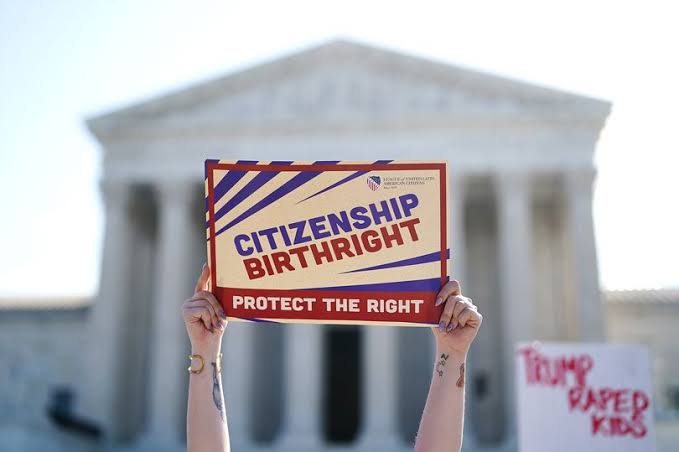
The United States Supreme Court has struck down President Donald Trump's executive order seeking to limit birthright citizenship, reaffirming that children born on American soil are entitled to US citizenship under the Constitution.
In a 6-3 ruling delivered on Tuesday, the court held that children born in the United States to parents who are in the country unlawfully or on temporary visas are citizens at birth under the 14th Amendment.
Chief Justice John Roberts, who wrote the majority opinion, said the Constitution's language is clear and guarantees citizenship to all persons born in the United States and subject to its jurisdiction.
The ruling preserves a constitutional principle that has been in place for more than 150 years and follows the landmark 1898 Supreme Court decision in *United States v. Wong Kim Ark*, which affirmed birthright citizenship for children born in the US to immigrant parents.
President Trump had signed the executive order shortly after returning to office, arguing that automatic citizenship encouraged illegal immigration. His administration maintained that undocumented immigrants were not fully subject to US jurisdiction under the Constitution.
However, the Supreme Court rejected that argument, ruling that an executive order cannot override the clear protections provided by the 14th Amendment.
The decision represents a significant legal setback for the Trump administration, effectively ending its effort to restrict birthright citizenship without a constitutional amendment.
Three conservative justices—Clarence Thomas, Neil Gorsuch and Samuel Alito—dissented from the ruling, arguing that the 14th Amendment should not be interpreted to grant citizenship to virtually everyone born in the United States regardless of their parents' immigration status.
Legal experts say the judgment reinforces one of the country's longest-standing constitutional protections and makes it extremely difficult for any future administration to alter birthright citizenship without amending the US Constitution.