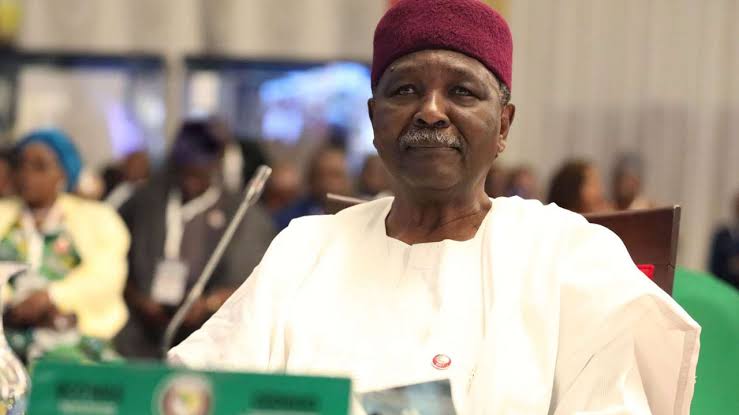
Former Nigerian Head of State, Yakubu Gowon, has rejected claims that he failed to stop the killings of Easterners in Northern Nigeria during the 1966–1967 crisis, insisting his administration made “open efforts” to contain the violence and restore order.
In extracts from his autobiography, *My Life of Duty and Allegiance*, Gowon said accusations that the federal government ignored the massacres were “wrong” and “full of mischief.”
“Some of my accusers have also suggested that I did not do enough to prevent the killing of Easterners in the North 1966 and 1967… This position is not only wrong and full of mischief,” he wrote, adding that it ignored “the undeniably open efforts I made at stopping the killings in all parts of Nigeria.”
The violence followed the July 1966 counter-coup that led to the killing of then Head of State Johnson Aguiyi-Ironsi and Western Region administrator Adekunle Fajuyi. The crisis escalated into reprisal attacks across Northern cities including Kano, Kaduna, Zaria, Bauchi and Jos, eventually feeding into the Civil War.
Gowon said he attempted to calm tensions through public broadcasts in English and Hausa, aimed at “touching the conscience of the people” and restoring normalcy.
“Acting on my belief that the use of force in the short run would not be as effective as an address to the heart and conscience of the people… I arranged to make a few public broadcasts,” he wrote.
He also described a breakdown in the political talks that followed, including the Aburi meeting in Ghana, which he said was later misrepresented by the Eastern leadership under Emeka Ojukwu.
“Ojukwu swiftly ordered Easterners in the North and other parts of Nigeria to return ‘home’ to safety in the East,” Gowon recalled, saying the move undermined efforts to reconvene constitutional talks.
According to him, Eastern delegates stopped attending negotiations after insisting that federal troops remain out of Western Nigeria, a position he said made further dialogue impossible.
Gowon also revisited his interactions with military officers during the crisis period, including discussions that touched on secession threats within parts of the army. He said he pushed back against suggestions that Northern officers should break away from Nigeria.
“I quickly disabused their minds and made them understand the futility of the North leaving the union,” he wrote.
He described the moment as one where persuasion, rather than force, helped prevent further fragmentation of the country.
On internal military tensions, Gowon recalled clashes over intelligence operations and alleged abuses during the period, including incidents linked to officers such as Murtala Muhammed.
He also recounted a confrontation with the late statesman Obafemi Awolowo over financial arrangements linked to arms procurement during the civil war era, describing it as part of the broader strain within the federal leadership.
Gowon said he personally intervened in several cases of alleged military excesses, including issuing warnings to troops in Ikeja after reports of civilian killings.
“I told them that our mission was to protect every Nigerian and that the nonsense about wasting compatriots must stop,” he wrote.
Reflecting on international involvement, Gowon said both Britain and the United States made clear during the crisis that they would not support any breakup of Nigeria.
“In noticeably clear terms, both envoys told me that neither a dime of the American dollar nor a penny of the British Pound would come… to any part of Nigeria that opted to secede,” he wrote.
He added that this position reinforced his belief in keeping the country together, even as internal pressures mounted.
Gowon concluded that the period between July 30 and August 1, 1966, marked one of the most unstable moments in Nigeria’s history, when “no one could predict where the ship of State was headed.”