Multiple stakeholders interviewed say the alliance is still struggling to gain traction in the region, with concerns ranging from limited visibility of the party to deep political mistrust among segments of the electorate.
A senior official of the Arewa Consultative Forum, Tukur Muhammad-Baba, said the party remains largely unfamiliar to many voters across the North, despite the national attention around its leading figures.
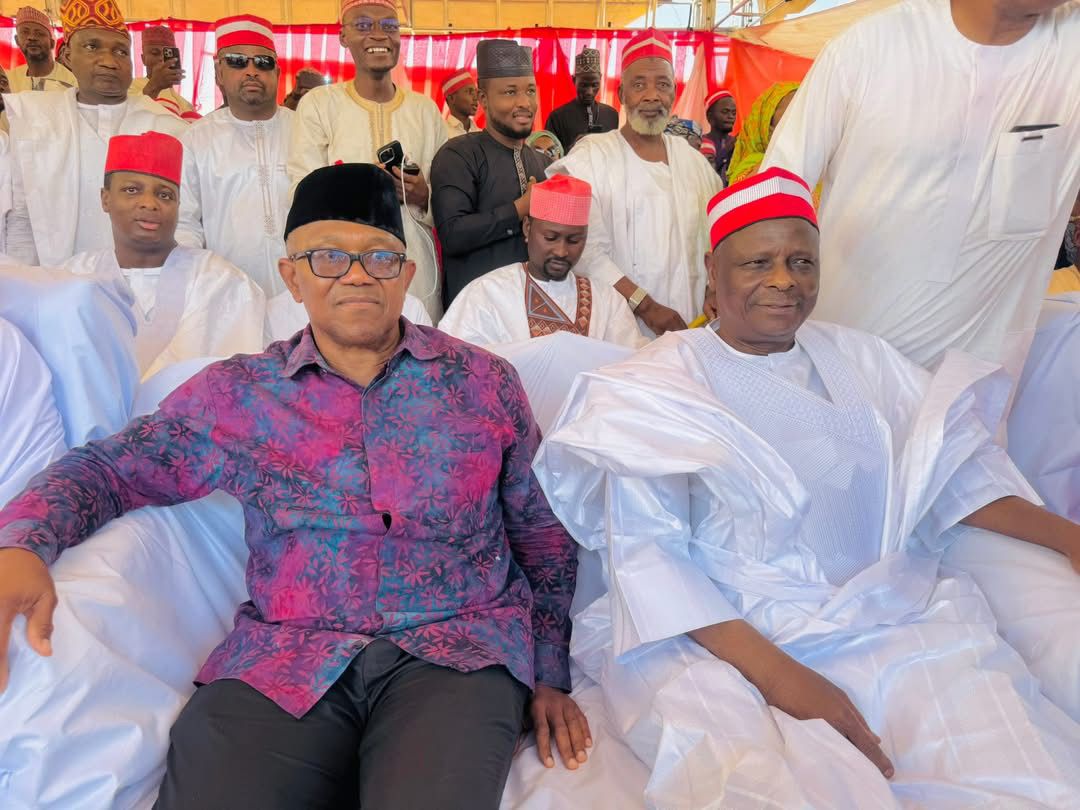
“The NDC is largely unknown to ordinary voters across the region,” he said. He added that while high-profile politicians attract attention, recognition does not automatically translate into electoral strength. “There is even doubt about whether Kwankwaso can still hold on to Kano, where he recorded his most impressive performance in the last election.”
Muhammad-Baba also pointed to shifting attitudes among northern voters, saying earlier political messaging built around identity and religion is losing influence. According to him, “the average northerner is tired of being told that having a northern candidate or a Muslim-Muslim ticket is the solution to Nigeria’s problems.”
He described a growing sense of political fatigue, where voters are increasingly skeptical of familiar campaign promises. “People are no longer impressed by slogans and promises. They want practical solutions,” he said.
But concerns about acceptability are not limited to party visibility. The President of the Arewa Youth Consultative Council, Zaid Ayuba, argued that Obi remains a difficult figure to sell in the North, regardless of Kwankwaso’s political reach.
He said, “Obi and Kwankwaso are known in the North, just like Tinubu and Atiku are known. But politics is different from victory. They are not accepted in the North in a way that would make one think they will win the 2027 election.”
Ayuba tied the resistance to long-standing suspicions around Obi’s political positions, especially his comments on the proscription of the Indigenous People of Biafra. “Obi had, in several interviews, tried to condemn the Supreme Court judgment on the proscription of IPOB and its designation as a terrorist organisation,” he said.
He insisted that such perceptions continue to shape voter attitudes. “There is nothing Kwankwaso or anybody can do to make Obi acceptable in Northern Nigeria. This is a political reality,” he added.
The controversy has also extended to political symbolism, with reports of campaign materials linked to both men being destroyed in parts of Kano State. In Ungogo Local Government Area, angry youths were reported to have burnt posters associated with the alliance, reflecting rising tensions around the emerging political arrangement.
A Kano State House of Assembly member, Muhammad Tomas, who had recently shifted to the NDC from the All Progressives Congress, has also reportedly returned to his former party, further highlighting the fluidity of alignments around the movement.
Academic observers say the debate is less about rejection and more about presence. A political science lecturer in Sokoto, who requested anonymity, argued that the NDC is still in its early stages of development across much of the North.
“The NDC does not have a presence in Kaduna, Jigawa, Benue, Plateau, Katsina, Gombe, Niger, Taraba, Zamfara and other states in the region,” he said. “It is a question of visibility. Go outside Kano, and you will see that the party is still unknown to most voters.”
He compared the situation to established parties such as the All Progressives Congress and the Peoples Democratic Party, which maintain entrenched structures across the region.
Despite these reservations, supporters of the alliance insist the political ground is shifting. In Borno State, the NDC chairman, Haruna Amuda, said the party is already experiencing rapid expansion.
“We are currently experiencing massive defections into the party, particularly from the ADC. They are coming in their thousands to register with us,” he said, adding that the party now has structures across all local government areas in the state.
In Jigawa State, party chieftain Abdulrazak Birnin-Kudu said mobilisation efforts are being driven largely by young people. “We have coordinators in every local government, and we are mobilising at the grassroots. Our strength is the youth,” he said.
The party’s governorship candidate in Jigawa, Aminu Dutse, acknowledged that the platform is still building credibility. “Our challenge is convincing voters that a new party can deliver,” he said, pointing to worsening economic conditions as a factor opening space for alternatives.
Civil society voices are also split on the issue. Steve Aluko-Daniel of the Northern Region Civil Liberty Organisation dismissed claims that the NDC lacks acceptance, arguing instead that political fragmentation in the North is creating room for new alignments.
“For the first time, the North is not having a monolithic front,” he said. “People are freely associating with their preferred party, and the NDC is coming into play.”
On the coalition side, Zakari Garba of the NDC Coalition Alliance Network described the Obi–Kwankwaso partnership as a strong political combination with growing national reach. He said the movement is building structures from the national level to polling units through youth groups, professionals and community organisations.
“Peter Obi is widely respected for prudence and economic management, while Rabiu Kwankwaso remains one of the most influential political figures in Northern Nigeria,” he said. “Together, they represent competence, national unity and credibility.”
Still, opposition voices within the region warn that political sentiment in the North remains unpredictable, shaped by history, identity and evolving voter expectations. While some see resistance, others point to early mobilisation as evidence of a contest still taking shape ahead of 2027.