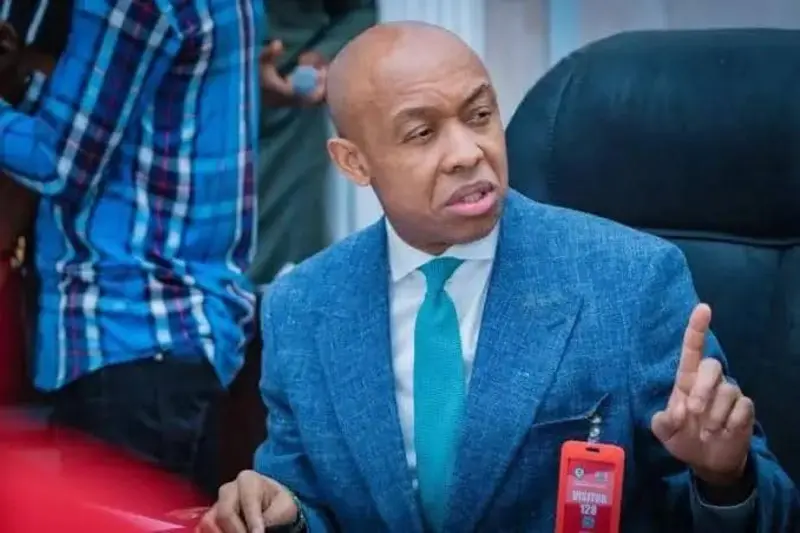

Long before the NDC primary election was conducted, I had consistently argued in this column that Engr. Eric Anyamene was the most popular aspirant in the race. That was not a political prediction; it was an observation based on reality. Across communities in Idemili North and South, his name had become part of everyday conversations. The reason was not difficult to understand. Here was a man who had done well for himself professionally and had chosen to invest a significant part of his time and resources in the welfare of his people.
His emergence as the party's candidate therefore came as no surprise to many observers. It was the natural outcome of a process in which party members weighed the options before them and chose the candidate they believed best represented the hopes and aspirations of the constituency. In many ways, the primary election confirmed what had already become clear on the ground: Engr. Anyamene had earned the trust and confidence of a large segment of the people.
The truth is that the current political mood in Idemili is shaped largely by dissatisfaction with the quality of representation the constituency has received in recent years. Across the constituency, there is a growing feeling that Idemili has not fully benefited from the opportunities that effective representation can provide. Many people are not interested in trading blame or revisiting old arguments. Their focus is on the future. They want representation that produces results. They want a representative who understands the challenges facing the constituency and possesses both the capacity and the determination to address them.
This is where the Anyamene candidacy becomes significant. For many supporters, he represents more than just another political aspirant. He represents the possibility of a reset. Through his interventions in education, youth development, community support, healthcare assistance, and infrastructure projects, he has demonstrated a willingness to engage directly with the needs of ordinary people. What makes these efforts particularly noteworthy is that they were carried out without the advantage of holding public office.
That reality has shaped public perception. Many people have looked at what he has achieved as a private citizen and concluded that he could accomplish even more with the resources, access, and platform that come with elected office. They want to see stronger advocacy for Idemili at the federal level. They want opportunities for young people. They want federal projects, economic opportunities, and a representative whose voice carries weight wherever decisions affecting the constituency are being made. Above all, they want Idemili to become part of important national conversations again.
The journey is still far from over. Winning the party ticket was only the first step. Yet it was an important step because it provided a platform for the larger contest ahead. What makes the moment particularly interesting is that Engr. Anyamene enters that contest with something every serious candidate desires but cannot easily manufacture: genuine grassroots support. His campaign has been driven largely by people who believe in his vision and see in him a credible alternative to the status quo.
For that reason, this is not simply about one man's political ambition. It is about a constituency searching for a new direction. It is about people who believe that representation can be more effective, more visible, and more responsive than what they have experienced in recent years. Whether one agrees with every political argument being made or not, it is difficult to ignore the growing sentiment that a significant number of Ndi Idemili see Engr. Eric Anyamene as an opportunity to turn the page.
That is why this moment matters. It is not merely the emergence of a candidate. It is the emergence of an idea: that Idemili can do better, expect more, and demand higher standards from those who seek to represent it. For many people across the constituency today, that idea has found expression in the candidacy of Engr. Eric Anyamene.
And that is what makes this the Anyamene moment—a chance to reset representation in Idemili.