
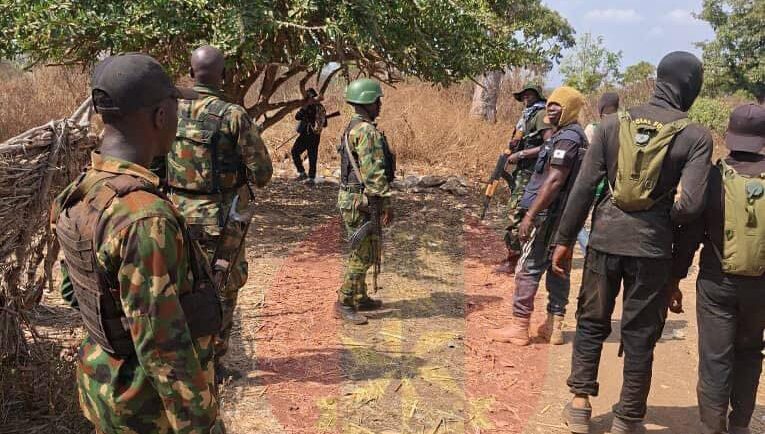
The soldier was attached to Forward Operating Base Aulari under the 202 Battalion. The incident reportedly took place at about 6:24 a.m. on May 26, 2026, during routine handling of weapons at the base. Initial accounts indicate that the explosion was not the result of active combat engagement or an external attack, but rather a malfunction or accidental detonation during weapon handling.
Security analyst Zagazola Makama, who has been tracking incidents in the North-East, reported that the soldier was in possession of an FN rifle fitted with a 96 Energa grenade when the explosive device detonated unexpectedly. The Energa grenade is a rifle-launched anti-armor projectile designed to be fired using compatible rifle systems, and it is typically handled under strict safety procedures due to its explosive payload.
According to available information from security sources, the soldier had not fired the weapon at the time of the incident. Observations made shortly after the explosion also suggested that the rifle’s safety mechanism remained engaged. These details have become central to early inquiries into what may have gone wrong during handling.
The explosion occurred while the grenade was still attached to the rifle’s muzzle assembly. Reports indicate that only the upper section of the grenade detonated, while the rear portion remained fixed to the weapon. This partial detonation pattern is consistent with a malfunction during handling or an unintended initiation rather than a fully launched detonation sequence.
The blast caused severe injuries to the soldier, particularly to the face and left wrist. The injuries were described as fatal, and the soldier was confirmed dead at the scene or shortly afterward. Medical personnel were unable to reverse the damage sustained in the explosion.
Following the incident, the body of the deceased soldier was evacuated to the 7 Division Medical Services and Hospital. It is expected that standard procedures, including documentation, notification of next of kin, and internal military reporting, will be carried out by the relevant authorities. No further personal details about the soldier have been officially released at the time of this report.
The Nigerian Army has not yet issued a full public statement detailing the circumstances of the incident, but such cases typically trigger internal investigations to determine whether procedural lapses, equipment faults, or handling errors contributed to the outcome. In military environments, particularly in active operational zones such as Yobe State, strict protocols govern the handling of explosives and grenade-launching systems. Even minor deviations from these procedures can lead to catastrophic consequences.
Forward Operating Base Aulari, where the incident occurred, operates under the 202 Battalion and is part of ongoing security deployments in the North-East region. The area has long been a focus of counterinsurgency operations, requiring regular use of heavy weapons systems and explosive ordnance. While the operational environment is inherently high-risk, accidental detonations during peacetime handling remain a separate category of concern, often linked to training, equipment condition, or momentary procedural lapses.
Preliminary accounts emphasize that the weapon was not discharged, which raises technical questions about how the grenade was initiated. Energa rifle grenades are designed with safety and arming mechanisms that should prevent detonation unless specific firing conditions are met. Investigators are expected to examine whether the device was defective, improperly fitted, or subjected to an unintended trigger mechanism.
Military safety experts often point out that incidents involving explosive ordnance rarely result from a single cause. Instead, they tend to involve a combination of factors such as mechanical fault, handling sequence, environmental conditions, or fatigue-related error. However, no conclusions have been reached in this case, and authorities are expected to rely on physical inspection of the remaining weapon components, eyewitness accounts, and unit-level logs to establish a clearer sequence of events.
As of this report, there is no indication that other personnel were injured in the explosion. The incident appears to have been isolated, though it has inevitably drawn attention within the base due to the nature of the weapon involved and the suddenness of the detonation.
The death adds to the ongoing concerns about safety risks faced by military personnel operating in active theatres where both combat exposure and equipment handling hazards coexist. While much public attention is often directed toward battlefield engagements, incidents occurring during preparation, maintenance, or routine handling of weapons continue to account for a portion of military fatalities.
An official inquiry is expected to provide further clarity in the coming days, including whether procedural changes or disciplinary recommendations will follow. For now, the focus remains on understanding how a secured weapon system resulted in a fatal explosion during what should have been a controlled handling situation.