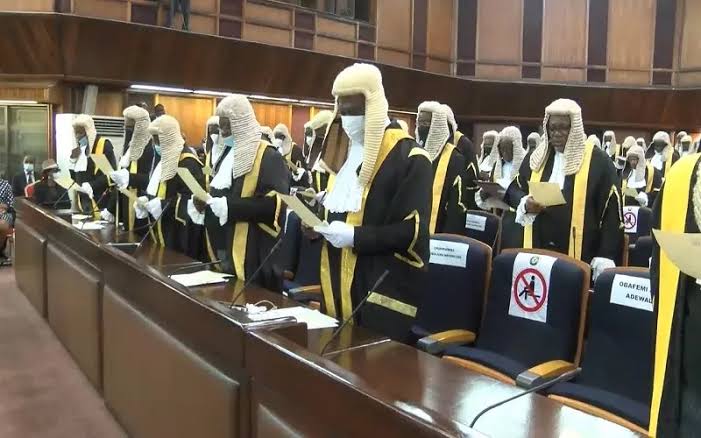

The Corporate Affairs Commission (CAC) is facing a legal challenge at the Federal High Court in Abuja over allegations that its electronic corporate registry was used to alter the shareholding structure of DAAR Investment & Holding Company Limited (DIHL), the parent company of DAAR Communications Plc, owners of Africa Independent Television (AIT) and RayPower FM.
The suit was filed by Chief Raymond Paul Dokpesi Jr., Chairman of DAAR Communications Plc, alongside other claimants, who are asking the court to order the restoration of the company's shareholding records to what they describe as the legally recognised position contained in the CAC's certified physical files.
The claimants allege that the Commission's online portal reflected major changes to DIHL's ownership structure without supporting statutory documents, board resolutions, share transfer instruments or probate proceedings as required under the Companies and Allied Matters Act (CAMA) 2020.
The CAC has not yet filed its defence in the matter and has also not publicly responded to questions submitted by Nigerian News Leader under the Freedom of Information Act seeking clarification on the disputed records.
According to the originating summons and supporting affidavits before the court, the Commission's certified physical records show that as of January 28, 2008, the company's shareholding consisted of late High Chief Raymond Aleogho Dokpesi with 300,000 shares representing 71.43 per cent of the company, Raymond Paul Dokpesi Jr. with 50,000 shares, Aishatu Dokpesi with 50,000 shares, Ade Orekoya with 10,000 shares and the late Engr. Adamu Biu with 10,000 shares.
The claimants argue that the Commission's manual file contains no subsequent share transfer documents, board resolutions or statutory filings authorising any alteration to that ownership structure.
However, an electronic status report allegedly generated from the CAC portal on October 18, 2025, reflected a substantially different shareholding arrangement. According to the court filings, the late Raymond Dokpesi's 300,000 shares no longer appeared in his name but had allegedly been redistributed among several individuals, including Raymond Paul Dokpesi Jr., Peter Aiyeghena Dokpesi, Halima Dokpesi, Raji Dokpesi and William Dokpesi.
The claimants further alleged that two inactive entries bearing the name "Oluwatosin Dokpesi," complete with personal details including an email address and date of birth, also appeared on the electronic register despite the name never having appeared in previous company filings.
According to the suit, the electronic records changed again in March 2026 while a formal petition challenging the alterations was still pending before the Commission.
The claimants told the court that William Dokpesi's recorded shareholding reduced from 166,667 shares to 83,334 shares, while Catherine Anuoluwapo Dokpesi, who was born in April 2009, appeared as a new shareholder with 83,333 shares.
They contend that the changes occurred while the Commission was already investigating complaints regarding the integrity of the register.
One of the central issues before the court is whether shares belonging to the late founder could legally have been redistributed before probate or Letters of Administration had been granted.
According to documents exhibited before the court, searches conducted at the probate registries of the Federal Capital Territory, Edo State and Lagos State allegedly found no grant of probate or Letters of Administration relating to the estate of the late Raymond Dokpesi as of April 2026.
Relying on Sections 173, 175 and 179 of CAMA 2020, the claimants argue that shares belonging to a deceased shareholder cannot lawfully be transferred without a grant of probate or Letters of Administration and the execution of valid transfer documents by the deceased's legal personal representatives.
In his personal statement attached to the court filings, Raymond Paul Dokpesi Jr. said, "Under Nigerian law, the dead cannot sign transfer forms, and their interests cannot be moved without the intervention of the courts."
Before filing the suit, the claimants submitted a series of questions to the CAC seeking explanations over the disputed records. Among other issues, they requested the identities of those who allegedly accessed and altered the DIHL records, the documents relied upon for the changes, the IP logs and timestamps associated with the alterations, and reasons why the register allegedly continued to change after a formal complaint had been lodged.
The suit also questions why the Commission allegedly declined requests to inspect documents said to have supported the electronic changes and why the electronic records differed from the certified physical records maintained by the Commission.
According to the court filings, the CAC acknowledged receipt of the complaint in November 2025 and indicated it required 14 days to review the matter. The claimants, however, allege that no corrective action was taken and that further changes were made to the electronic register during the period.
The dispute has also revealed differing positions among members of the Dokpesi family.
Court documents show that Raymond Paul Dokpesi Jr., Raji Dokpesi, Halima Dokpesi and William Dokpesi each informed the CAC that they neither requested nor consented to the disputed allocation of shares reflected on the electronic portal.
In a statement attached to the proceedings, Raji Dokpesi said, "I state categorically that I had no knowledge of, nor did I consent to, any such allotment. I hereby expressly disclaim the purported allotment in its entirety."
Halima Dokpesi similarly stated, "I have no knowledge of, nor was I privy to, any such redistribution. I was not previously aware of the extent of my late father's shareholding."
William Dokpesi acknowledged participating in efforts aimed at reflecting what he believed to be a fair family arrangement but maintained that he acted in good faith.
He stated, "I participated in steps taken to reflect what was believed to be a fair family structure in good faith. I acknowledge that certain statutory filings may not have been properly filed. I express willingness to support procedural reversion."
Peter Aiyeghena Dokpesi, however, defended the electronic records in correspondence submitted to the CAC. According to the court documents, he argued that DIHL underwent a comprehensive restructuring in 2012 and maintained that Raymond Paul Dokpesi Jr. had acted as a director under that structure for several years without objection.
The claimants dispute that assertion, arguing that documents contained in the CAC's physical file relate only to changes in the company's directors and not to any redistribution of shares.
The case also raises questions regarding DIHL's reported shareholding in DAAR Communications Plc, a company listed on the Nigerian Exchange.
According to the claimants, the CAC portal reflected an increase in DIHL's holdings from 4,890,523,000 shares to 5,016,418,000 shares.
They rely on a letter from First Registrars, the official registrar of DAAR Communications Plc, which they say confirmed that no transfer documentation had been registered and that no recent change affected the company's substantial shareholding.
The claimants argue that the discrepancy between the CAC portal and the registrar's records raises broader concerns about the integrity of corporate records relating to listed companies.
Raymond Paul Dokpesi Jr. said his decision to make the matter public was driven by his responsibilities as chairman of a publicly listed company.
"Maintaining silence would not only be irresponsible but could be legally interpreted as concealing a material fact, potentially exposing me to liability for facilitating a false market," he said.
He also alleged that the disputed records had affected efforts to stabilise the company financially.
"I will not be intimidated. These CAC online portal manipulations frustrate our efforts to settle outstanding wages and severance pay for our staff, exit statutory debts and damage our brand," he said, adding that he had reported security concerns to relevant authorities.
In the suit, the claimants are asking the Federal High Court to declare that the CAC has a statutory duty to investigate the alleged alterations, order the rectification of DIHL's register to reflect the 2008 shareholding structure, compel the Commission to perform its statutory obligations and award costs against the agency.
Petitions relating to the matter have also reportedly been forwarded to the Securities and Exchange Commission (SEC), NGX Regulation, the Department of State Services (DSS) and the Inspector-General of Police.
As of the time of filing this report, the CAC had not filed its defence or issued a detailed public response to the allegations. The claims contained in the suit remain allegations, and the Federal High Court is expected to determine whether the disputed alterations were lawfully made and whether any rectification of the corporate records is warranted.