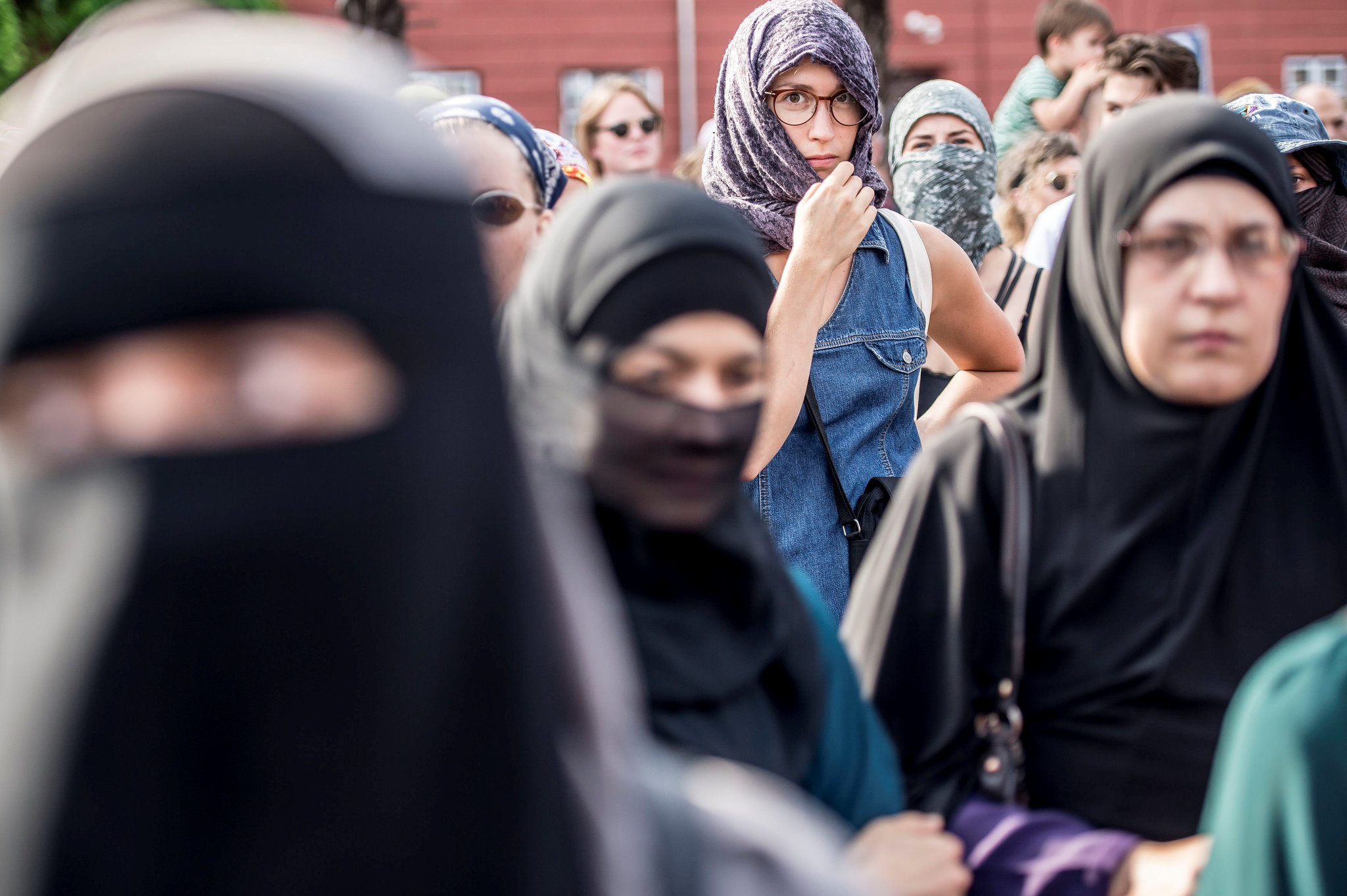
The Danish government is considering a nationwide ban on the public broadcast of the Islamic call to prayer, known as the Adhan, as part of a broader review of Islam's presence in public spaces.
Immigration Minister Morten Bodskov said the government will reopen an investigation into whether such a ban would be legally permissible under Danish law.
Speaking to Danish news agency Ritzau, Bodskov said the call to prayer "should not be heard over Danish rooftops," arguing that it has no place in the country. He also said the government was concerned about what it described as the growing "Islamisation" of Danish society.
If pursued, the proposal would mark the third attempt by a Danish immigration minister to establish a legal basis for banning the public broadcast of the Adhan. Similar efforts were launched in 2020 and 2025.
The Adhan is traditionally broadcast five times a day from mosque minarets using loudspeakers. While some Danish municipalities already regulate amplified calls to prayer through local noise rules, the government is now exploring whether a nationwide prohibition can be introduced.
In Copenhagen, the Grand Mosque already operates under an agreement with local authorities that does not allow outdoor loudspeaker broadcasts of the call to prayer.
Any nationwide ban is expected to face legal scrutiny. Denmark's constitution guarantees freedom of religion, including the right to public worship, meaning authorities will have to balance religious rights with concerns raised by residents living near mosques.
Current Danish law already permits restrictions in certain circumstances, including against preaching that undermines democratic values and financial support for prohibited organisations.
The proposal comes as Prime Minister Mette Frederiksen begins her third term after a snap election in March. Her government has drawn international attention for maintaining some of Europe's strictest immigration policies.
Among the measures introduced in recent years is Denmark's "ghetto" policy, which allows authorities to relocate residents from neighbourhoods with high concentrations of migrants. The country has also tightened asylum rules, including requiring some asylum seekers to contribute towards accommodation costs by surrendering valuables. Those whose asylum applications are rejected generally do not qualify for state financial assistance.
During the 2015 European refugee crisis, Denmark accepted fewer asylum seekers than several neighbouring countries.
Although Frederiksen's Social Democrats did not win an outright parliamentary majority in the March election, she secured a third term after forming a four-party coalition with the Moderates, Social Liberals and Green Left. The government also relies on parliamentary backing from the Red-Green Alliance.
Frederiksen called the snap election amid rising geopolitical tensions over Greenland following repeated comments by U.S. President Donald Trump regarding the Arctic territory.