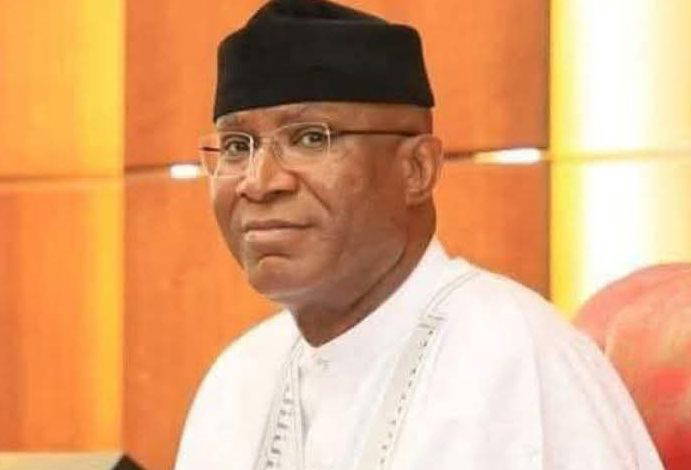
Former Deputy Senate President, Senator Ovie Omo-Agege, has declared support for Labour Party presidential candidate Peter Obi ahead of the 2027 general election while maintaining that he still stands by key economic policies introduced under President Bola Tinubu’s administration.
Omo-Agege made the remarks during an interview on ARISE TV’s *The Morning Show* on Wednesday, where he addressed questions about his recent political realignment following his exit from the All Progressives Congress (APC).
Explaining his departure, he said his exit from the ruling party was not voluntary.
“I was a member of the APC. I never left the APC; the party left me and left my over 230,000 supporters in Delta State,” he said.
Despite his shift in political support, Omo-Agege said his position on major economic reforms introduced by the Tinubu administration remains unchanged. He specifically pointed to the removal of fuel subsidy and the liberalisation of the naira as decisions he continues to support.
“When Mr President came up with the economic policies, most especially the naira floatation and subsidy removal, these are policies I supported and continue to support,” he said.
He also argued that similar policy directions had been advocated by Peter Obi, stressing that his endorsement of the Labour Party candidate should not be seen as a rejection of the reforms themselves.
“Even though these policies were espoused by Mr President, which I support, the same policies were also supported by Peter Obi,” he said.
Omo-Agege maintained that his backing of Obi is rooted in confidence in how Nigerians might respond to the implementation of the same policies under a different leadership arrangement.
“The question is, have I changed my opinion about this? No, I have not,” he said.
“I just believe that under the new platform I’ve gone to, these policies will continue and the people, the majority of Nigerians who have issues with those policies, would feel more confident because they are more comfortable and trust Peter Obi that he will make these policies work more than Mr President could have done.”
He further insisted that the reforms themselves were not flawed, but that public perception and trust in implementation remain central issues.
“The policies are not bad policies,” he added.