
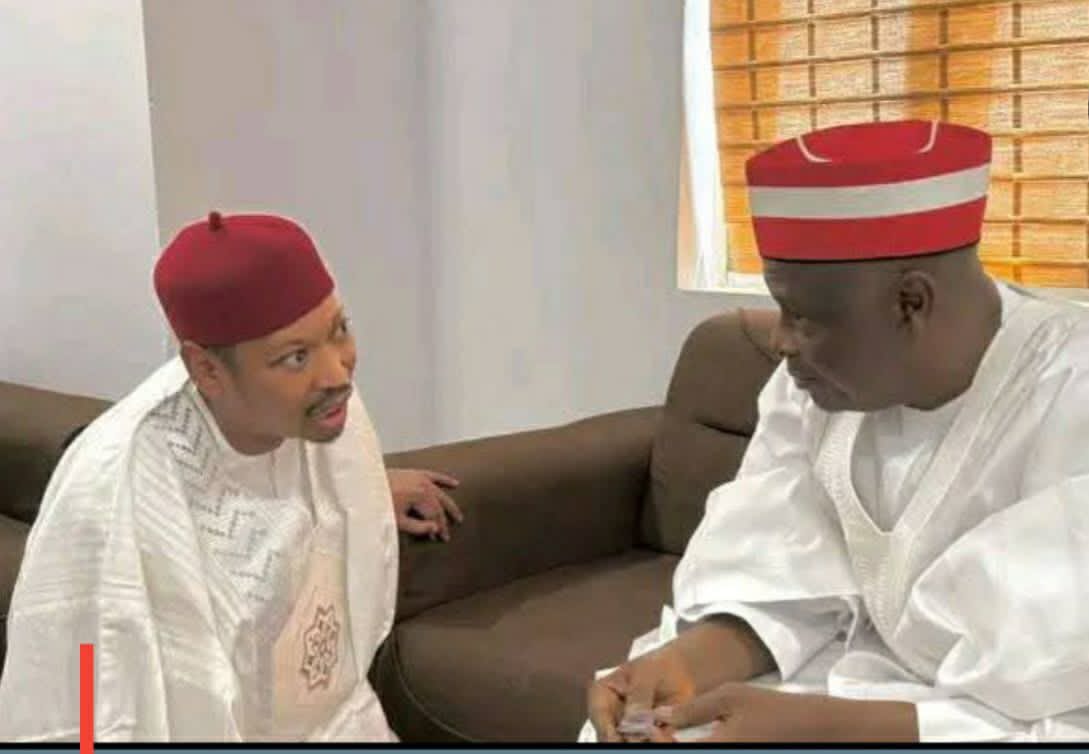
Abdulaziz Umar Ganduje, the eldest son of former APC national chairman Abdullahi Umar Ganduje, has obtained a nomination form to contest for the House of Representatives under the National Democratic Congress, adding a family-level twist to Kano?s already intense political rivalry.
He is seeking to represent the Dawakin Tofa/Tofa/Rimin Gado Federal Constituency, an area closely tied to the Ganduje political name. Reports from Kano said Abdulaziz picked up the form and later met former governor Rabiu Musa Kwankwaso, leader of the Kwankwasiyya movement.
The move is politically significant because Abdulaziz?s father has been one of the most visible figures in the All Progressives Congress. Abdullahi Ganduje served as Kano governor before becoming APC national chairman, while Kwankwaso has remained his most prominent rival in the state?s political landscape.
Abdulaziz, however, has long been linked to the Kwankwasiyya camp, making his formal move into an opposition platform less surprising to close watchers of Kano politics. Still, the symbolism is powerful: the son of a former APC national chairman seeking office through a rival structure associated with his father?s long-time opponent.
More from Politics
The constituency itself also carries political weight. In 2023, Umar Abdullahi Ganduje, another son of the former governor, contested for the same seat under the APC but lost to a candidate of the New Nigeria Peoples Party. Abdulaziz?s bid therefore places another member of the family into a race already shaped by party rivalry, personal networks and Kano?s shifting voter loyalties.
For the NDC, his candidacy could help attract attention and supporters within a constituency where the Ganduje name is already familiar. For the APC, it may revive questions about internal family divisions and the changing strength of its local structures.
The race is still at an early stage, and nomination does not guarantee victory. But Abdulaziz?s move has already become a headline because it reflects the fluid nature of Kano politics, where family identity, party loyalty and grassroots mobilisation do not always move in the same direction.