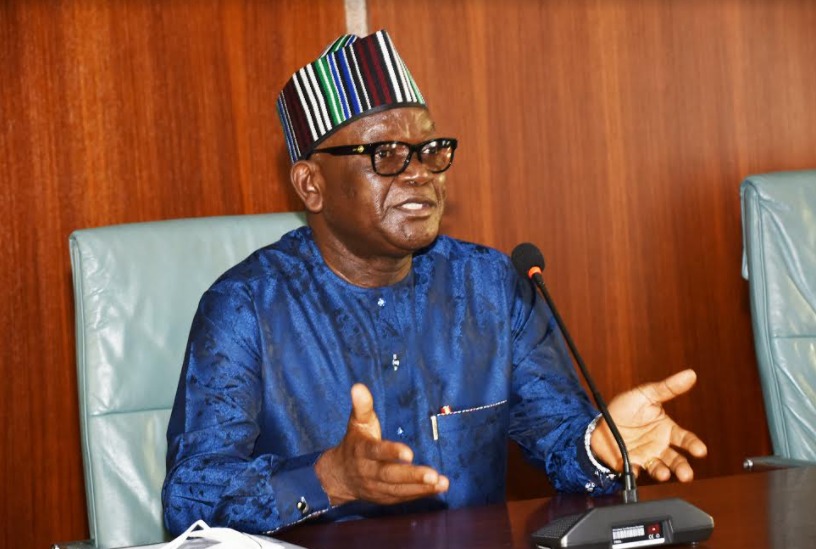
A judicial commission of inquiry set up by the Benue State Government has reported that N139.8 billion in public funds could not be accounted for during the administration of former Governor Samuel Ortom between 2015 and 2023.
The commission, chaired by Justice Jubril Idrisu, presented its findings to Governor Hyacinth Alia in Makurdi on Friday.
According to the report, Benue State generated more than N826.5 billion in revenue during the eight-year period under review, while total expenditure stood at N683.4 billion. The commission said the difference of about N139.8 billion remains unaccounted for and recommended that the funds be recovered from individuals found liable.
Idrisu said the commission's findings, contained in two volumes, raised concerns about the management of public finances during the period.
The panel was inaugurated by Governor Alia in February 2024 as part of efforts to examine the handling of state resources under the previous administration. It was one of two commissions established by the government. The second panel was tasked with investigating the sale and lease of government assets, state-owned companies, markets, and moribund enterprises.
Beyond the unaccounted funds, the commission said it uncovered questionable loan transactions involving financial institutions and local government councils. According to Idrisu, some loan repayments significantly exceeded the original amounts borrowed, while supporting documentation was either inadequate or unavailable.
The panel also reported irregular transfers of public funds to certain financial institutions without sufficient records to establish their legitimacy. It recommended appropriate recovery measures where necessary.
Responding to the report, Governor Alia, represented by Deputy Governor Sam Ode, said his administration remains committed to transparency, accountability, and institutional reform.
He commended the commission for its work and said its recommendations would help strengthen public institutions, improve financial oversight, and ensure accountability where wrongdoing is established.
Alia also acknowledged challenges faced by the commission during its investigation, including difficulties in obtaining information and cooperation from some individuals and institutions. He apologised for logistical constraints encountered by the panel, attributing them to institutional and administrative challenges inherited by his administration.